Organizing an Event in Brussels: 25 Tips for a Successful Event
Organizing an event in Brussels starts with strategy, stakeholders, and timing — not with booking a venue. 25 practical tips on the EU agenda, invitations, program, interaction, and promotion.


Organizing an event in Brussels doesn't start with booking a venue or inviting speakers. Especially when you want to reach policymakers, European institutions, companies, or civil society organizations, a successful Brussels event begins with three questions:
Who do you want to reach? What do you want to have changed afterwards? And why would these specific people make time to come to your event?
Brussels offers a wide array of conferences, debates, lunches, receptions, and stakeholder meetings every day. Therefore, an interesting topic alone is not enough. Your event must be relevant to the people you want to reach and take place at the right moment.
These 25 tips will guide you from strategy and invitation to program, interaction, networking, and practical organization. For a comprehensive checklist and further insights, please visit our language hub.
Brief Answer: How to Organize a Good Event in Brussels?
You organize a successful event in Brussels in this order:
Define the outcome you want to achieve.
Link your topic to the current European agenda.
Choose the right moment in the Brussels policy process.
Determine which stakeholders truly need to be in the room.
First, create an appealing invitation, then design the program.
Choose a location easily accessible to your target audience.
Focus on participants, not your own organization or speakers.
Make the program interactive and concrete.
Plan sufficient time for networking.
Start promotion early and approach stakeholders personally.
That's the short version. Below are the key choices, step by step.
1. Start with the European Agenda, Not Your Own Message
A common mistake is starting with: “We have something important to say. How do we get people in Brussels to come and listen?”
Flip that question.
What is currently happening in Brussels where your topic is relevant?
Anyone wishing to reach European policymakers, interest groups, or other stakeholders must align with their agenda. Find the intersection between your interest and a broader European issue. That makes your event more relevant — and makes it easier to convince good speakers and the right participants.
You can rarely dictate the Brussels agenda yourself; therefore, look for the current European interest that your topic aligns with.
Tip 1. Think from the European Agenda
Don't just ask: what do we want to say? Instead, ask:
What debate is currently ongoing?
What problem are European policymakers trying to solve?
What decision is approaching?
How does that relate to our topic?
What contribution can we make to that conversation?
Tip 2. Think from the European Calendar
Timing is crucial. A substantively excellent event may have little impact if the relevant decision has already been made. Therefore, determine at what point in the policy process people need your knowledge, perspective, or network.
2. First, Determine Who Needs to Be in the Room
A Brussels event isn't successful just because the room is full. It becomes successful when the right people are there.
Therefore, create a stakeholder list in advance. For example, consider:
relevant European policymakers;
staff and portfolio holders within European institutions;
industry and interest organizations;
companies;
civil society organizations;
experts and researchers;
journalists;
potential partners.
An important Brussels insight: the most famous person isn't always the one with whom you'll ultimately have the most important conversation.
People might want to hear a European Commissioner, but speak to the responsible official.
Tip 3. Involve Key Stakeholders Before the Event
Don't just invite crucial people when everything is already set. Call them earlier and ask:
What would make this event interesting for you? What question should we discuss? Who do you think should be at the table?
This achieves three things: your program becomes more relevant, key stakeholders feel involved, and the likelihood increases that they will actually attend and bring their network.
3. Always Think from the Visitor's Perspective: What’s in it for them?
Your organization might want to present a report, draw attention, exert influence, build a network, or introduce an initiative. But that is your goal.
The potential visitor asks a different question: Why would this be worth an hour and a half of my Brussels workday? That must be immediately clear.
Tip 4. Make Your Event Useful for the Guest
People come, for example, because they gain new knowledge, can exert influence, meet interesting people, can contribute something themselves, want to speak to someone who is normally difficult to reach, or want to understand what is happening around a particular issue. A free lunch alone is not a proposition. The content must be relevant.
Tip 5. Don't Just Preach to the Choir
An event about why your organization is right primarily attracts people who already agree. If you want to convince others, make room for different perspectives, critical questions, people from outside your usual network, and genuine discussion. An event that looks like a promotional show will make the very people you want to convince less likely to attend.
4. First Create the Invitation, Then the Program
This might sound backward, but it's an excellent test.
First, write the invitation that makes you think: this is what the target audience would truly come to Brussels for.
Can't write it yet? Then the concept is probably not sharp enough either. Only then do you design the program that fulfills that promise.
A good invitation immediately answers:
Why is this topic relevant now?
What central question is being addressed?
Who will you meet?
What can you contribute?
What will you take away afterwards?
Why should you attend this particular meeting?
5. Choose a Location that Suits Both the Goal and the Target Audience
For a Brussels stakeholder event, location is more than just ambiance. Someone with a busy schedule needs to be able to easily drop in and leave. Therefore, lower every possible barrier.
Consider distance to the workplace of your key target audience, accessibility by public transport, time, duration, space for conversations and networking, and flexible room setup. Keep events short and close to the target audience, at a time when people with busy schedules can easily join.
Tip 6. Don't Book a Venue Before You Know What Needs to Happen Inside It
A fixed theater setup can be beautiful for a keynote, but problematic if you want participants to work with each other. For interactive meetings, preferably choose a space where tables and chairs can be moved.
6. Design the Program for Participants, Not for Speakers
This is perhaps the most important program rule. Many conferences are structured around five important people, each speaking for ten minutes, then ending up on a panel. The result: long presentations, an overcrowded panel, and an audience that disappears into their phones.
The attendee is the VIP, not the speaker. Don't design around people who absolutely must get speaking time, but around what visitors need.
Tip 7. Only Good Speakers Get a Presentation
Is someone substantively important but not a strong speaker? Interview that person. That gives the moderator control over time, pace, relevance, tension, and the topics that are truly interesting to the audience.
Tip 8. Keep Panels Small
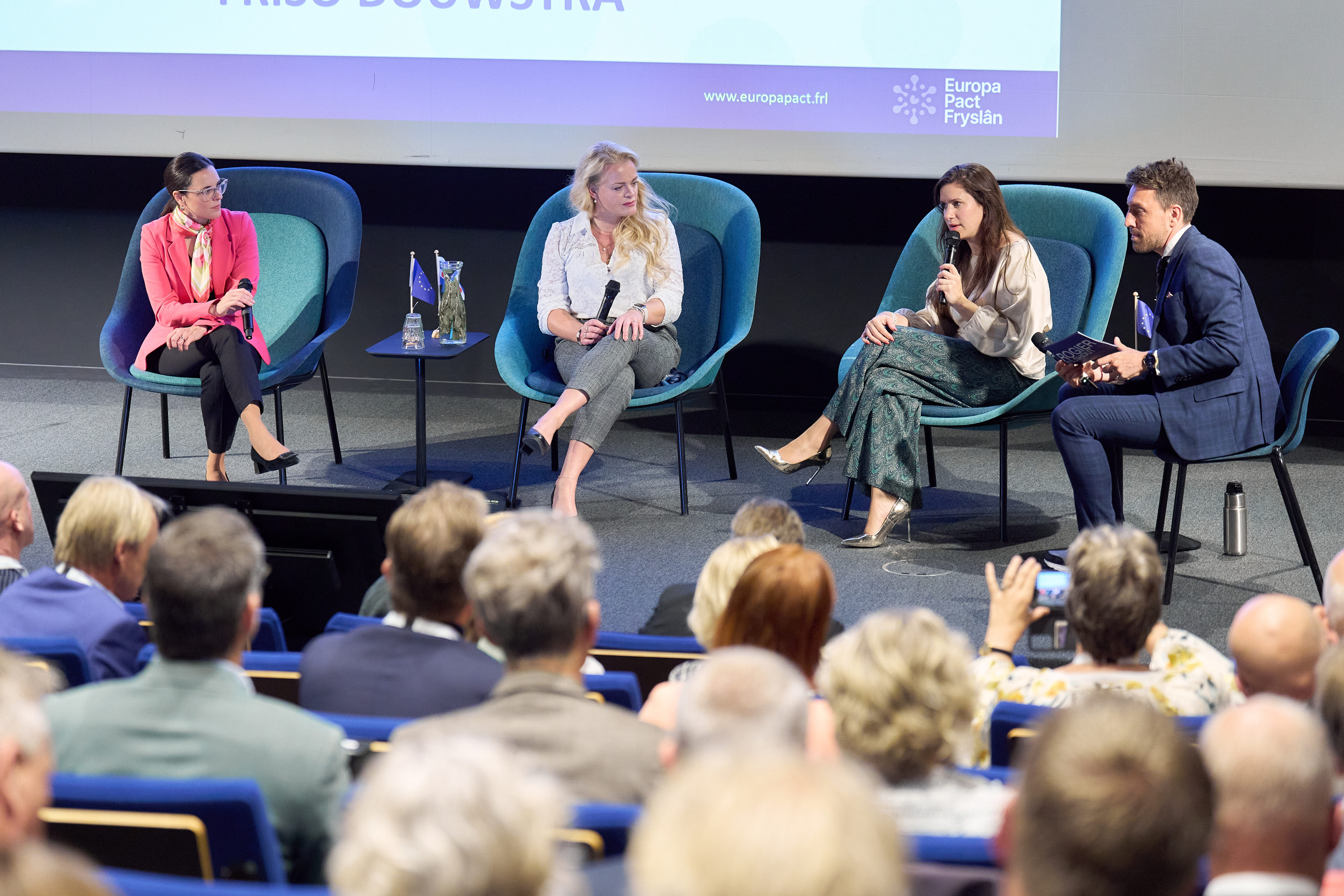
Four panelists is approximately the maximum if you truly want to have a conversation. For each panel, first ask this question: Why is this a panel? Not: Which stakeholders do we still need to fit somewhere on stage? But: Which combination of perspectives makes this conversation better for the audience?
7. Make Interaction Part of the Program, Not an Afterthought
Many events save interaction for the end: presentations → panel → “Are there any questions from the audience?” That's a waste. Engage participants from the start — with a poll, a quick question to the audience, reactions from the public, a dilemma, discussions in pairs, a short Q&A, or a debate.
Interaction makes the program more lively, helps participants think actively, and gives speakers information about what truly resonates with the audience. Interaction is the foundation, not the icing on the cake.
Tip 9. Incorporate Interaction Before the Networking Break
Ensure people have already discussed something with each other before the break. Then, during the coffee break, it naturally arises: “That was interesting what you just said…” — instead of everyone silently looking at their phones.
8. Allow Sufficient Time for Networking
For many people, the content program is just one reason to come to an event in Brussels. The other reason is: who else is there?
Therefore, don't schedule every minute. A long coffee break or a good reception can be more valuable for the ultimate outcome than yet another speaker. Don't skimp on breaks.
9. Make European Topics Concrete
European discussions easily become abstract — strategic autonomy, resilience, competitiveness, green transition, inclusion. Important concepts, but not automatically a good conversation.
Constantly ask: What does this mean concretely? For whom? What changes in practice? Where is the dilemma? Who experiences the consequences? Use case studies, concrete examples, and people from the field. Europe abounds in abstraction; make visible what it's really about.
10. Start Promoting Your Event Early
A great program in a half-empty room remains a half-successful event. Promotion is therefore not a final step. It is part of the strategy.
Tip 10. Describe Not Only Who Is Coming, But What Will Happen
A well-known name is useful. But “MEP X speaks at our event” is less informative than “MEP X discusses why proposal Y, in her opinion, does not adequately address problem Z.” People don't just want to know who is speaking, but especially about what.
Tip 11. Use Personal Invitations for the Most Important Guests
For the twenty people you absolutely want in the room, a newsletter is often not enough. Approach them personally. Brussels relies heavily on networks and relationships — a personal invitation can make the difference between “interesting” and “I'll put it in my agenda.”
Checklist: Organizing an Event in Brussels
Use this checklist before finalizing your venue and program:
The event's goal is concrete.
The connection to the European agenda is clear.
The timing aligns with the relevant policy process.
The key stakeholders have been identified.
Crucial stakeholders are involved early.
The invitation clearly states what the visitor will gain.
The location is logical for the target audience.
The program is designed from the perspective of attendees, not speaking time.
Panels have a maximum of a few truly relevant participants.
Interaction is included before the first break.
There is sufficient time for networking.
Abstract topics are made concrete.
Promotion begins well before the event.
Important participants are approached personally.
A moderator/chairperson is involved early in the design.
When Should You Involve a Moderator or Chairperson?
Preferably before the program, speakers, and venue are fully finalized.
A good moderator does more than just ask questions on the day itself. They can help to clearly define the goal, design the program to achieve that goal, determine which speakers are truly necessary, transform monologues into interviews or discussions, design interaction, reduce the amount of content, and safeguard the participants' perspective.
Frequently Asked Questions About Organizing an Event in Brussels
How do you organize a successful event in Brussels?
Start with the desired outcome and target audience. Then, link the topic to the current European agenda and choose a logical moment in the policy process. Involve key stakeholders early, design the program from the visitor's perspective, and allocate ample space for interaction and networking.
How do you attract European policymakers to your event?
Clearly demonstrate why the event is relevant to them. Choose a topic that aligns with their current portfolio, organize it close to their workplace, and minimize the time commitment. Approach key individuals personally and, where possible, involve relevant stakeholders in the preparation phase.
What should you consider when choosing a venue in Brussels?
Don't just look at appearance and capacity. Pay particular attention to accessibility for your target audience, the flexibility of the room, space for networking, and the ability to adapt the seating arrangement to your program.
How do you make a Brussels event interactive?
Incorporate interaction from the start: polls, dilemmas, brief audience reactions, discussions among participants, interviews, and debates. Don't save all interaction for the concluding Q&A.
How many people should be on a panel?
A maximum of about four panelists, and only when they genuinely add different perspectives or expertise.
How important is networking at an event in Brussels?
Very important. For many attendees, access to relevant people is at least as important as the stage program. Therefore, schedule ample breaks and create interaction before those breaks, making it easier for participants to engage with each other.
Should you organize a hybrid event in Brussels?
Only if online participation genuinely adds value. An online or hybrid event requires a different program than a physical event: shorter segments, fewer monologues, more interaction, and potentially a separate online moderator.
Organizing an Event in Brussels with Moderating.EU
Moderating.EU doesn't simply organize the stage program. The focus is on event strategy, program design, and moderation: from clarifying goals and stakeholders to creating a program where participants are actively involved.
The experience stems from years of moderation, event design, and working on European topics and within the Brussels policy environment.
Want to discuss an event in Brussels? Briefly tell us what you want to achieve, who the event is for, and approximately when it should take place.